



During a compliance audit at a petrochemical refinery in the Gulf early in my career, I sat down with an Operations Director who proudly showed me his "Zero LTI" (Lost Time Injury) chart. He was convinced his safety scope was perfect because no one had broken a bone in two years. However, as we walked the plant, I pointed out the high noise levels without hearing protection zones, the lack of ventilation in the welding bays, and the palpable stress among the control room operators. He had mastered "Safety" but had completely neglected "Health" and "Welfare." That moment solidified a lesson I now teach every junior safety officer: OHS is not just about preventing falls; it is a complex, living ecosystem involving physical, mental, and social well-being.
Understanding the true scope and nature of Occupational Health and Safety (OHS) is the first step toward moving from a reactive "compliance" mindset to a proactive safety culture. This article creates a roadmap for the foundational pillars of OHS, dissecting the crucial differences between health and safety, the multidisciplinary knowledge required to manage it, and the moral, legal, and financial arguments that drive our industry. Whether you are studying for your ASP, implementing ISO 45001, or managing a construction site, grasping these concepts is non-negotiable for effective risk management.
Defining the Core Terminology
In the field, terms like "health," "safety," and "welfare" are often used interchangeably by laypeople, but as professionals, we must be precise. I have seen legal cases crumble because an organization failed to distinguish between an acute safety failure and a chronic health exposure. To manage risk effectively, you must understand exactly what you are trying to protect.
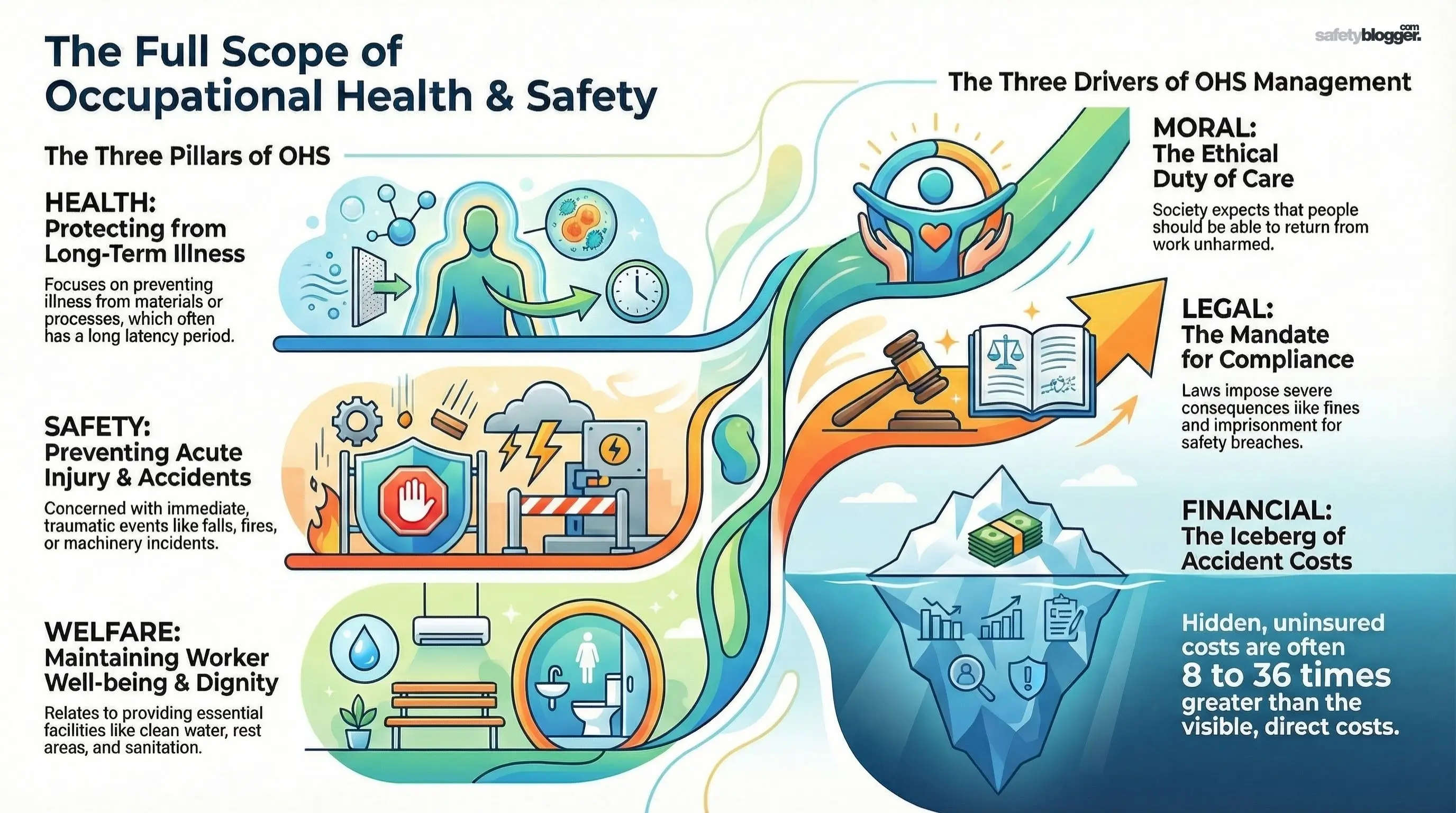
Health
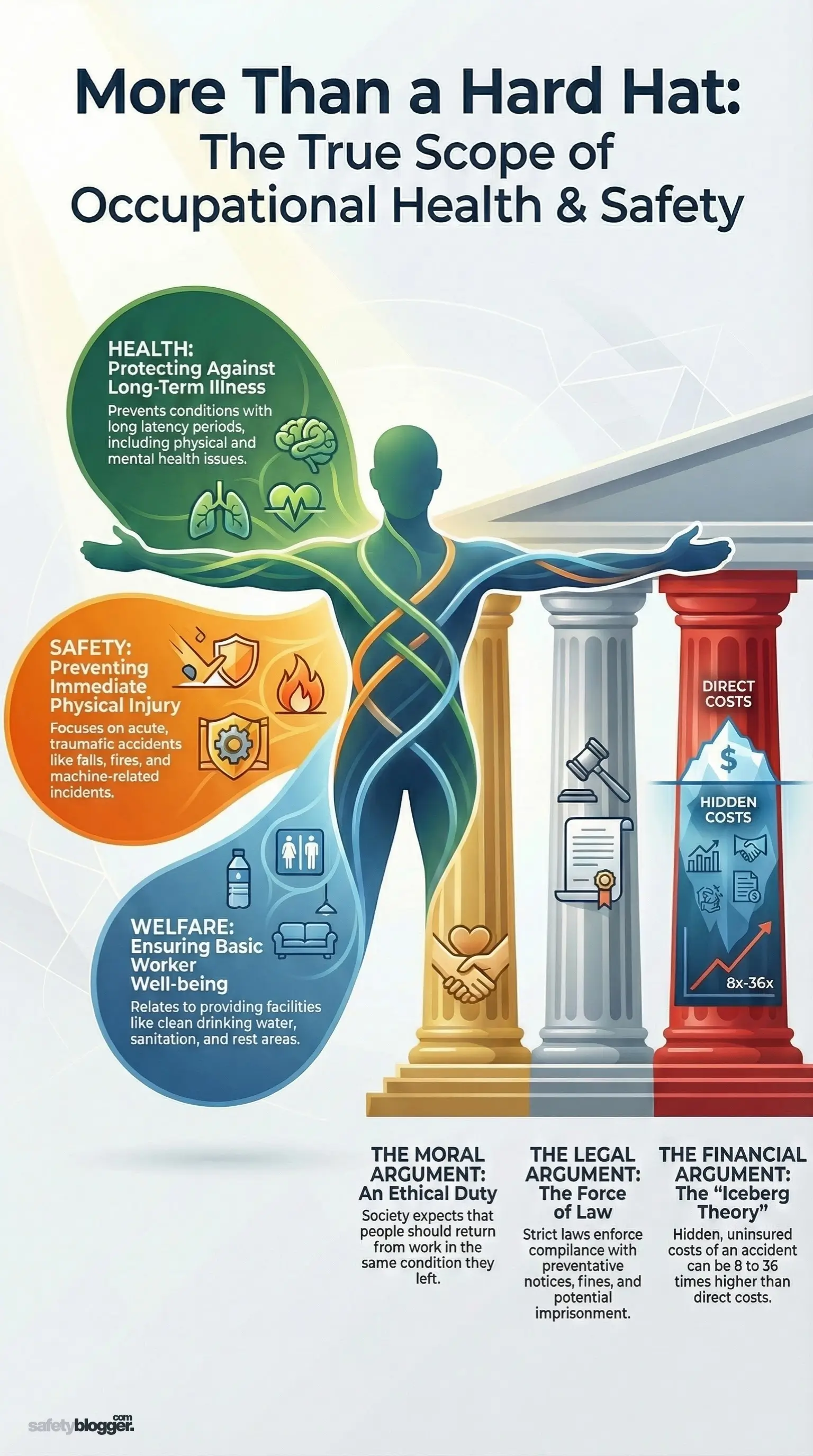
Health focuses on the protection of the bodies and minds of people from illness resulting from the materials, processes, or procedures used in the workplace. This includes:
Physical Health: Prevention of conditions like asbestosis, dermatitis, or noise-induced hearing loss.
Mental Health: Managing work-related stress, burnout, and psychological safety.
Latency: Unlike safety incidents, health impacts often have a long latency period (e.g., Silicosis can take 10+ years to manifest).
Safety
Safety is generally concerned with the prevention of physical injury or acute accidents resulting from workplace hazards. This is what most people visualize when they think of our job. It involves:
Machine guarding to prevent amputation.
Fall protection systems.
Fire prevention and emergency response.
Immediate, traumatic events.
Welfare
Welfare relates to the provision of facilities to maintain the basic well-being and dignity of the worker. During audits, I often find this is the most neglected area, yet it has a massive impact on morale. It includes:
Access to clean drinking water.
Sanitary conveniences (toilets and washing stations).
Rest and eating facilities away from contaminants.
Changing rooms and lockers.
Pro Tip: When conducting a risk assessment, force yourself to categorize hazards into "Health" and "Safety" columns. I frequently see "Noise" listed as a safety hazard. It isn't—it is a health hazard. This distinction determines whether you need an audiologist or a safety engineer.
The Multidisciplinary Nature of OHS
One of the reasons Occupational Health and Safety (OHS) is such a challenging and respected profession is that it does not rely on a single branch of science. When I study a root cause analysis for a complex incident, I am rarely looking at just one failure. I am looking at a convergence of physics, biology, and human psychology. To be an effective OHS practitioner, you must be a generalist capable of drawing from various academic disciplines to solve real-world problems.
The Intersection of Sciences
OHS is not a standalone subject; it is a tapestry woven from multiple technical fields. You cannot manage a chemical plant without understanding chemistry, nor can you manage a construction site without grasping basic physics. This complexity is why "safety" is often misunderstood by outsiders who think it is merely common sense. In reality, it is the practical application of scientific principles to protect human life.
Key Disciplines in OHS
To effectively identify hazards and implement controls, an OHS professional must have a working knowledge of several core subjects. You do not need to be an expert in all of them, but you must know enough to ask the right questions and bring in specialists when needed.
Physics and Engineering
We rely on physics to understand forces, mechanics, and electricity. This underpins the "Safety" aspect of our role.
Mechanics: Calculating the safe working load (SWL) of a crane or the structural integrity of scaffolding relies on core engineering principles.
Forces: Understanding momentum and gravity is essential for calculating fall clearance distances for harnesses.
Machinery: Knowledge of kinetics helps in designing effective machine guarding to prevent entanglement or crushing injuries.
Medicine and Biology
To prevent occupational diseases, we must understand how the human body functions and how it interacts with harmful agents. This is central to the "Health" aspect of OHS.
Toxicology: Understanding routes of entry (inhalation, absorption, ingestion) to control exposure to hazardous chemicals.
Anatomy: Applying ergonomic principles to prevent Musculoskeletal Disorders (MSDs) from repetitive strain or poor posture.
Pathology: Recognizing the biological effects of physical agents, such as how ionizing radiation damages cells or how high noise levels destroy inner ear hair cells.
Psychology and Sociology
You can have the best engineering controls in the world, but if the safety culture is toxic, accidents will happen. This field addresses the "Human Factor."
Behavioral Safety: Understanding motivation, risk perception, and why workers might choose to bypass safety features.
Stress Management: Recognizing the impact of workload and mental health on decision-making and focus.
Group Dynamics: Analyzing how peer pressure and organizational culture influence individual safety compliance (the difference between "work as done" vs. "work as imagined").
Law
Every control measure we implement is usually underpinned by a regulatory framework. We act as the interpreter between the statute book and the shop floor.
Compliance: Interpreting statutes (like the OSH Act) and regulations (like OSHA 1910) to ensure the company avoids prosecution.
Standards: Applying international frameworks like ISO 45001 or NFPA codes to establish best practices.
Liability: Understanding civil vs. criminal liability to advise management on the legal consequences of negligence.
Pro Tip: Don't be afraid to say "I don't know." During a major refinery audit, I encountered a complex radiation issue. Instead of guessing (and risking lives), I called in a Certified Health Physicist. Being a generalist means knowing your limits and knowing which specialist to call.
The Three Main Reasons for Managing Health and Safety
Whenever I pitch a budget increase to a Board of Directors, I never rely on just one argument. Effective safety management is built on three pillars: Moral, Legal, and Financial. These are often taught in OTHM and NEBOSH courses, but in the real world, you must know which argument to leverage depending on your audience.
1. The Moral (Humanitarian) Argument
This is the ethical bedrock of our profession. Society expects that when a person leaves their home to earn a living, they should return to their family in the same condition. It is unacceptable in a civilized society for people to be killed or maimed in the pursuit of profit.
Duty of Care: Employers owe a duty of reasonable care to their workers.
Societal Expectation: Communities lose trust in companies that disregard human life.
Psychological Impact: A fatality devastates the victim’s family, colleagues, and the wider community.
2. The Legal Argument
If the moral argument fails to sway stakeholders, the legal argument provides the enforcement. Occupational health and safety is governed by strict laws that, if broken, result in severe consequences. I have supported legal teams in defense cases, and the scrutiny applied to "reasonable practicability" is intense.
Preventative: Enforcement agencies (like OSHA or HSE) issue notices to force compliance before an accident occurs.
Punitive: The criminal law system imposes fines and imprisonment for breaches of statute.
Compensatory: Civil law allows injured victims to sue for negligence to claim compensation for their injuries.
3. The Financial (Economic) Argument
Accidents are incredibly expensive. Many organizations operate on thin margins, and a single catastrophic event can bankrupt a company. When discussing this with CFOs, I use the "Iceberg Theory."
Direct Costs (Insured)
These are the visible costs that are usually covered by insurance.
First aid and medical treatment.
Sick pay.
Repairs to damaged equipment.
Indirect Costs (Uninsured)
These are the hidden costs, often 8 to 36 times higher than direct costs, which insurance does not cover.
Loss of corporate reputation.
Production delays and downtime.
Legal fees and investigation time.
Training replacement staff.
Low morale leading to reduced productivity.
The Scope of Responsibility: Who is Protected?
A common misconception I encounter in boardrooms is the belief that safety protocols only apply to full-time staff on the payroll. This is a dangerous oversight. Under international standards like ISO 45001 and regulations such as the Health and Safety at Work Act, the scope of protection is far wider.
During audits, I frequently issue non-conformance reports (NCRs) to host companies for the unsafe actions of their contractors. Why? Because you cannot outsource your liability. If work is happening on your site or on your behalf, you are responsible for the safety of everyone affected by it.
Employees
This is the primary group and the most obvious duty of care. The relationship between employer and employee creates a strict liability to ensure safety "so far as is reasonably practicable."
Safe Place: Maintaining the physical integrity of the facility.
Safe Equipment: ensuring tools and machinery are guarded and maintained.
Competency: Providing adequate training, instruction, and supervision.
Non-Employees
The legal scope extends significantly beyond the payroll to anyone who interacts with the business operations. Ignoring these groups is often where companies face the largest civil claims.
Contractors and Sub-contractors: You are responsible for vetting their safety records before they start and monitoring them while they work. You cannot simply point the finger at them if an accident occurs on your premises.
Visitors and Clients: Anyone entering your site must be inducted, protected, and often escorted. This includes delivery drivers, inspectors, or business partners.
The General Public: This is critical in industries like construction, transport, or retail. If a crane drops a load onto a public street, or a member of the public slips in a mall, the organization is liable.
Vulnerable Groups
The "Nature" of OHS requires us to move away from a "one size fits all" approach. A blanket safety policy often fails vulnerable groups because it does not account for their specific limitations or increased susceptibility to harm.
Young Persons: They often lack experience, maturity, and risk perception. They may not recognize dangers that an experienced worker would avoid instinctually.
Pregnant Workers: They require specific risk assessments regarding exposure to chemicals (teratogens), manual handling limits, and rest facilities.
Disabled Workers: Standard safety procedures often exclude them. For example, a fire alarm is useless to a deaf worker, and stairs are a trap for a wheelchair user. We must create Personal Emergency Evacuation Plans (PEEPs) to ensure their safety.
Pro Tip: When auditing your "Scope," look at your emergency evacuation drills. Did you account for the visitor in the meeting room? Did you account for the contractor on the roof? Did you account for the receptionist with a broken leg? If your headcount only includes healthy employees, your system is flawed.
Barriers to Good Health and Safety Standards
If Occupational Health and Safety (OHS) were merely about following a checklist, we would have zero accidents globally. However, the operational reality of a workplace creates constant friction. As an auditor, I rarely find that accidents happen because a company "didn't know" the rules. They happen because practical barriers prevented those rules from being applied effectively.
I view these barriers as the root causes of systemic failure. Identifying and dismantling them is the only way to move from a paper-based safety system to a functional safety culture.
1. Complexity of the Workplace
Workplaces are living, breathing organisms that change daily. A risk assessment written in January might be obsolete by June if the process or layout has shifted.
Dynamic Environments: Construction sites change shape every week; refineries introduce new catalysts.
High Turnover: Integrating temporary staff or contractors creates a constant need for retraining.
SMS Lag: Keeping the Safety Management System (SMS) aligned with these rapid changes requires constant vigilance, which many companies fail to maintain.
2. Conflicting Demands (Production vs. Safety)
This is the single most common barrier I encounter. There is an inherent tension between the goal of production (speed, output, profit) and the goal of safety (caution, checks, compliance).
Deadline Pressure: When a project is behind schedule, managers often implicitly encourage shortcuts.
Corner-Cutting: "Just get it done" becomes the unwritten rule, leading to bypassed interlocks or skipped permits.
Mixed Messages: If a CEO preaches "Safety First" but bonuses are tied strictly to production speed, workers will always choose speed.
3. Behavioral Issues
You can design the perfect guardrail, but you cannot engineer out human nature entirely. Behavioral safety is often the final hurdle.
Complacency: The "I’ve done it this way for 20 years and never been hurt" attitude is a dangerous cognitive bias.
Competence Gap: Genuine ignorance where a worker simply doesn't understand the severity of the hazard.
Negligence: Deliberate violation of rules, often driven by frustration or fatigue.
4. Resource Constraints
Safety is an investment, not just a mindset. It costs money to implement correctly.
Budgetary Limits: Small to Medium Enterprises (SMEs) often lack the capital for top-tier engineering controls (like automated local exhaust ventilation).
Equipment Quality: Companies may opt for cheaper, less effective PPE or delay maintenance on aging machinery to save cash.
Training Costs: High-quality, practical training is expensive and takes staff away from production time.
Pro Tip: When you face the "Budget Barrier," stop talking about the cost of the solution. Start talking about the cost of the accident. I often show management that the cost of one significant downtime incident (investigation, fines, lost production) far outweighs the cost of the proposed safety upgrade.
Conclusion
The scope and nature of Occupational Health and Safety extend far beyond ticking boxes on a checklist. It is a multidisciplinary field that requires a balance of engineering precision, legal knowledge, and psychological insight. We manage safety not just to avoid the financial sting of the "Iceberg," or to escape the gavel of the law, but to uphold the moral obligation that every worker deserves to go home safe at the end of the day.
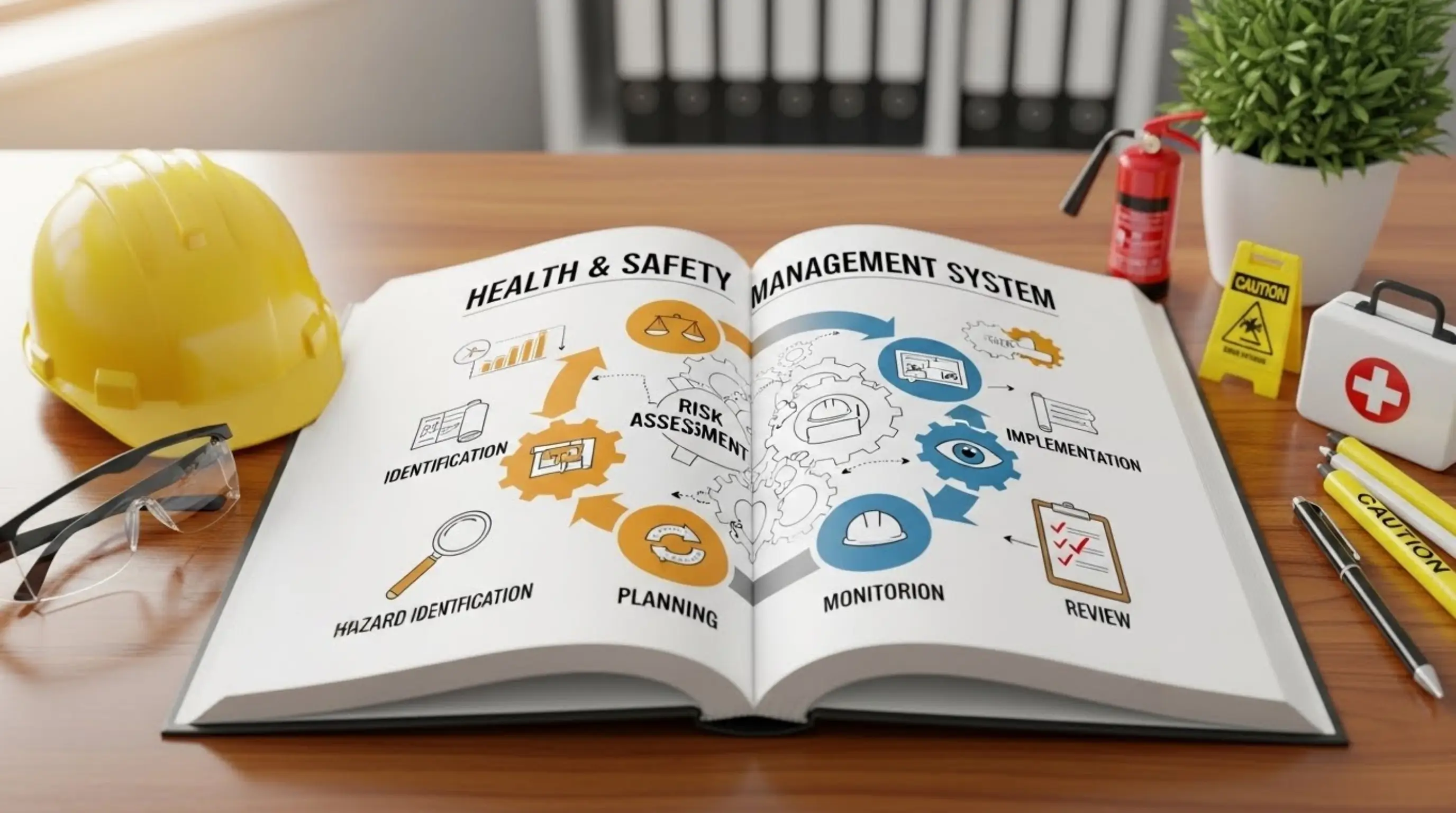
As you move forward in your safety career or manage your facility, remember that hazards are not static. The most effective approach is a systematic one—using frameworks like Plan-Do-Check-Act (PDCA) to continuously assess the changing nature of risk. Do not settle for compliance; strive for a culture where health and welfare are valued just as highly as production speed.





Comments
Loading...